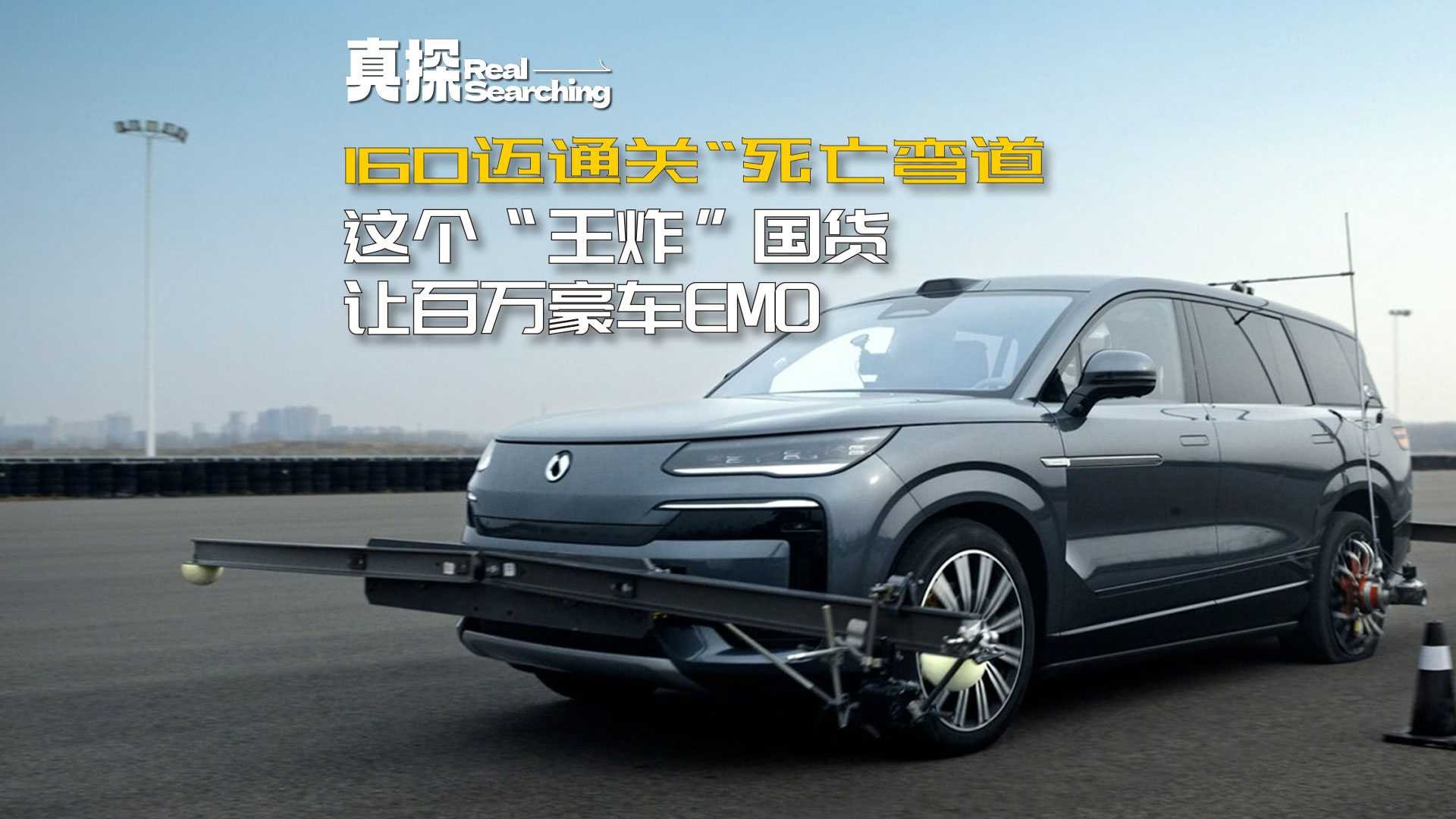
While all automakers are still worshiping the Cayenne’s 82.4 km/h moose test as the “textbook,” a Chinese player has torn up the rulebook entirely—the 3.1-ton Denza N9 corners violently at nearly double that, 160 km/h, and in the blue smoke of tire friction drift the shattered fragments of foreign luxury cars’ dignity.
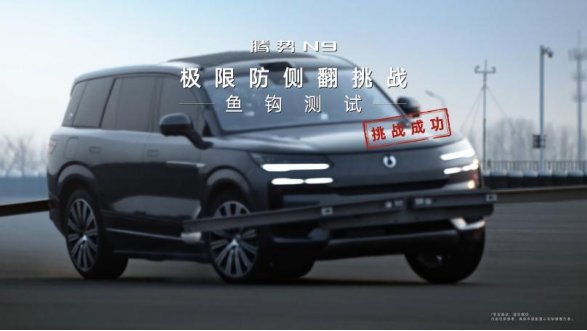
Tri-motor vectorized torque strikes plus air suspension predictive black technology let this 5.2-meter-long behemoth carve through a deadly corner with Formula racing-level line precision. This is not technological iteration; it is a new tombstone planted for 500,000-yuan-class luxury cars, and it shows everyone: domestic cars have truly risen.
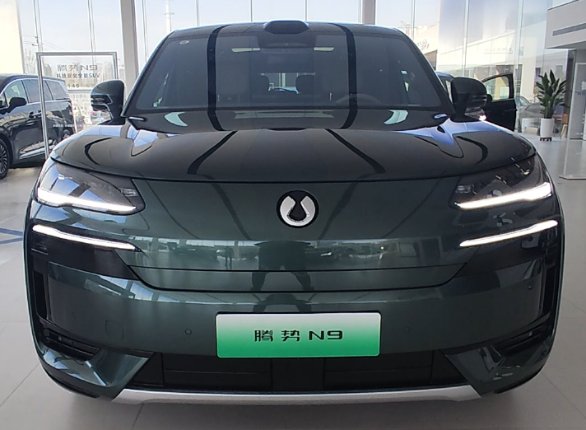
Safety at its core: hell-level testing tempers the original aspiration for safety
In the automotive world there is a “life-and-death speed” called the moose test: while the car is traveling at high speed, the steering wheel is suddenly jerked hard to simulate obstacle avoidance, and above 80 km/h, 99% of cars will roll over.
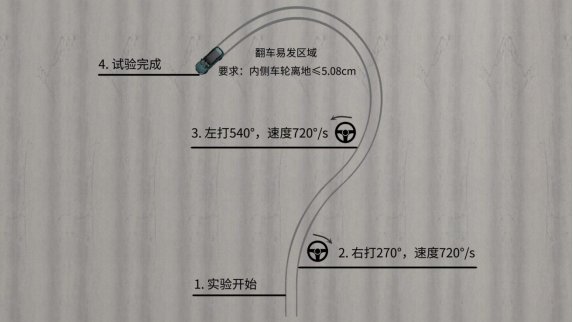
(Moose test diagram)
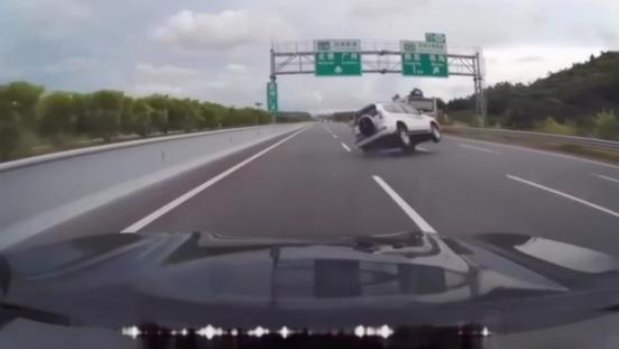
(Rollover example)
This time, the Denza N9 directly maxed out the difficulty to 160 km/h—equivalent to suddenly jerking the steering wheel on the highway; those who understand, understand how dangerous this is. But in the test, the Denza N9 not only did not roll over, its tires lifted less than 5 centimeters off the ground. Compared with the Porsche Cayenne’s 82.4 km/h, it is almost double, like driving an SUV while doing F1 drifting, and still braking steadily.
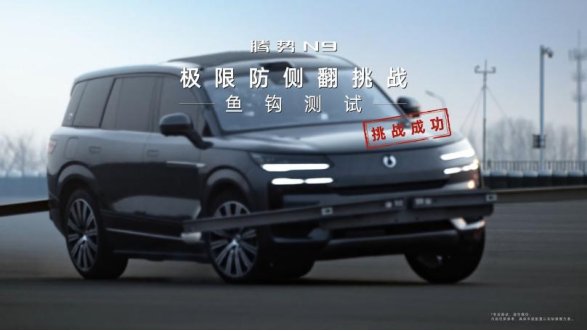
So, the question is, how exactly did the Denza N9 do it? It turns out it has 3 “black technologies” integrated into its bones, adding safety support.
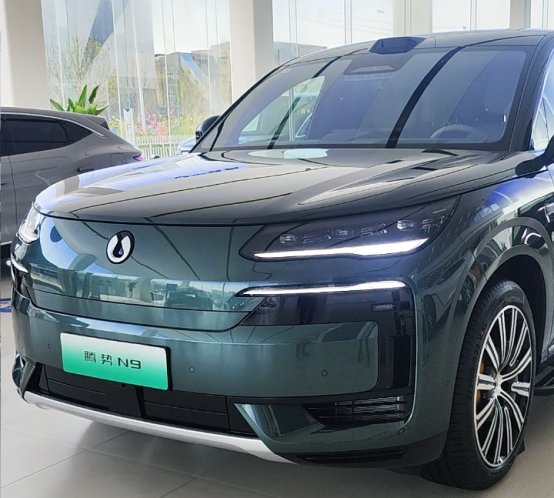
NO.1 Three motors “each minding its own business”: the three front and rear motors are like three veteran drivers working in perfect sync, adjusting power in milliseconds; the outer wheel instantly unleashes 1200 N·m of torque, forcibly “bending” the centrifugal force back;
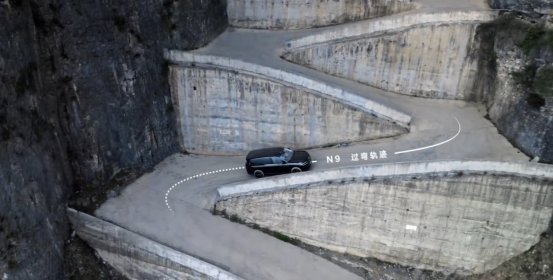
NO.2 Air suspension that can “transform”: when encountering a sharp corner, the suspension becomes twice as stiff within 0.1 seconds, and body lean is controlled within 3 degrees, so occupants in the car can hardly feel any side sway;
NO.3 It can even save the day when a tire blows on ice and snow: even if a tire blows on an icy road, the rear wheels will automatically “steer” to correct the route and pull it back on track within 3 seconds, while a traditional fuel vehicle would have long lost control at this point.
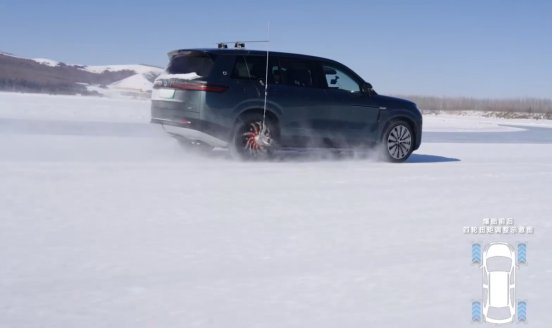
Others fear a blowout; it turns a blowout into a show. In addition to overturning the ceiling of the “moose test,” the Denza N9 also challenged three “hell-level” blowout scenarios: a blowout at 180 km/h on a straight road (a speed only supercars dare to drive), with the body deviating only 0.5 meters; a blowout at 144 km/h in a corner (with a corner radius less than half that of a highway), with lateral displacement under 1 meter; and a blowout at 77 km/h on an ice surface at minus 20°C, stabilizing within 3 seconds after ESP intervention.
Traditional fuel SUVs have a blowout loss-of-control rate as high as 65%, but it relies on “rear-wheel steering + power distribution” to reduce the risk to below 5%, equivalent to installing an “invisible stabilizer” on the wheels.
Full-power cheat: astounding black technology, dominating all scenarios
The Denza N9’s sense of ease comes from its unreplicable product core.
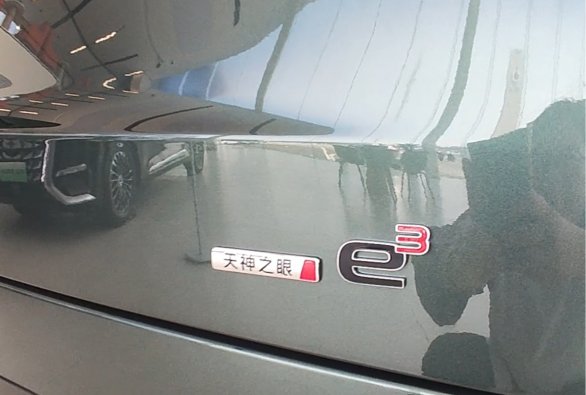
First, the e-Platform 3.0 tri-motor is fast and agile: 180 kW front + dual 200 kW rear motors, total power 580 kW, 0-100 km/h in 3.9 seconds, even fiercer than a BMW X5 M; for a large 5.2-meter car, the turning radius is only 4.65 meters, equivalent to attaining the agility of a Hongguang MINI.
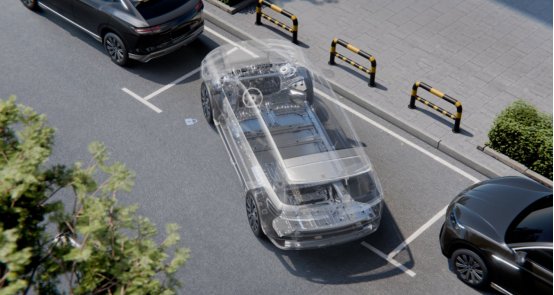
The DiSus-A dual-chamber air suspension brings an experience only found in million-yuan luxury cars: at high speed the suspension stiffens by 40%, stable like a sedan; at low speed it softens by 30%, maximizing comfort. It can also “see the road” ahead: for potholes 150 meters in front, the suspension will adjust height in advance, smarter than Rolls-Royce’s “magic carpet.” Moreover, its God’s Eye B intelligent driving features 1 lidar + 12 cameras, supports mapless urban navigation, and handles traffic jams, turns, and parking completely, so even a novice can instantly become a “veteran driver.”
What is most impressive is that the Denza N9 has long broken the curse of being a “commuting tool,” letting you instantly switch between life, work, and off-road scenarios. Imagine: when the 6.4㎡ business cabin instantly becomes a four-person conference cabin, the rear folding double bed is already prepared for paid nap time.
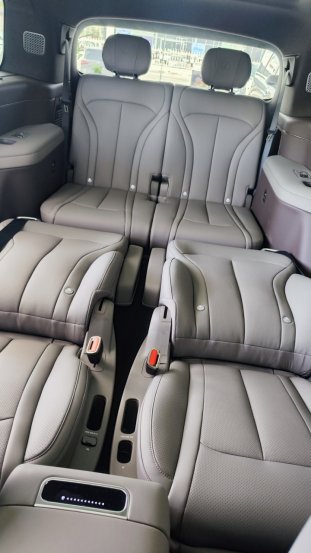
Its approach angle is 21°, departure angle 22°, wading depth 40 cm, and it easily crushes a 30° steep slope; occasional wild fun—isn’t that appealing? On the way home, the six-zone voice system lets the whole family grab the mic and give orders, with the brat shouting “play cartoons” and dad roaring “skip the song” without interfering with each other. The moment the roof-mounted drone rises, the whole family instantly becomes the lead cast of a road movie.
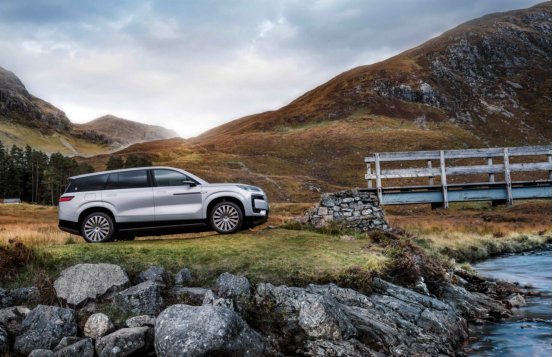
It sold 1,708 units in 10 days on the market, surpassing the BMW X5. This move of dimensional strike directly flips the table in the 500,000-yuan luxury SUV market. No wonder netizens sharply comment, “To buy a luxury SUV, you really don’t need to keep staring at BBA.”
Final words:
The Denza N9’s record-breaking moose test this time is not just the victory of one car, but a “declaration of counterattack” for Chinese automobiles: before, we chased foreign brands; now, we set the rules ourselves! When a 390,000-yuan car can crush the safety performance of million-yuan luxury cars, when “tri-motor + air suspension” goes from “exclusive to high trims” to “standard from the entry level,” you will discover: true luxury is not about propping up face with a badge, but about truly giving consumers “the confidence in life-and-death moments.”


