[Central China Auto Network] When choosing a pure electric sedan for commuting, don't just focus on range—range and energy consumption per 100 km should be considered together, because that is where the long-term cost difference lies.
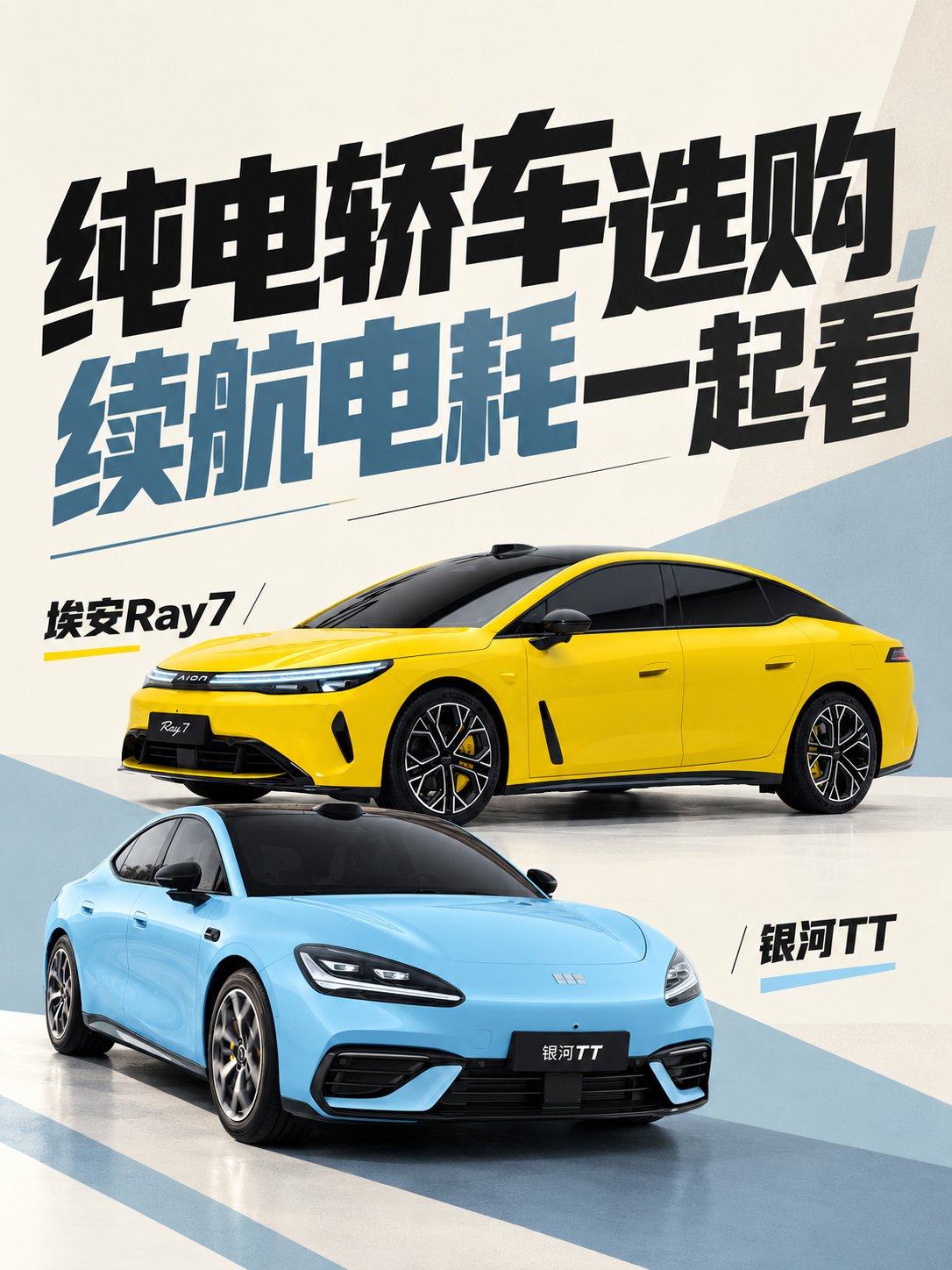
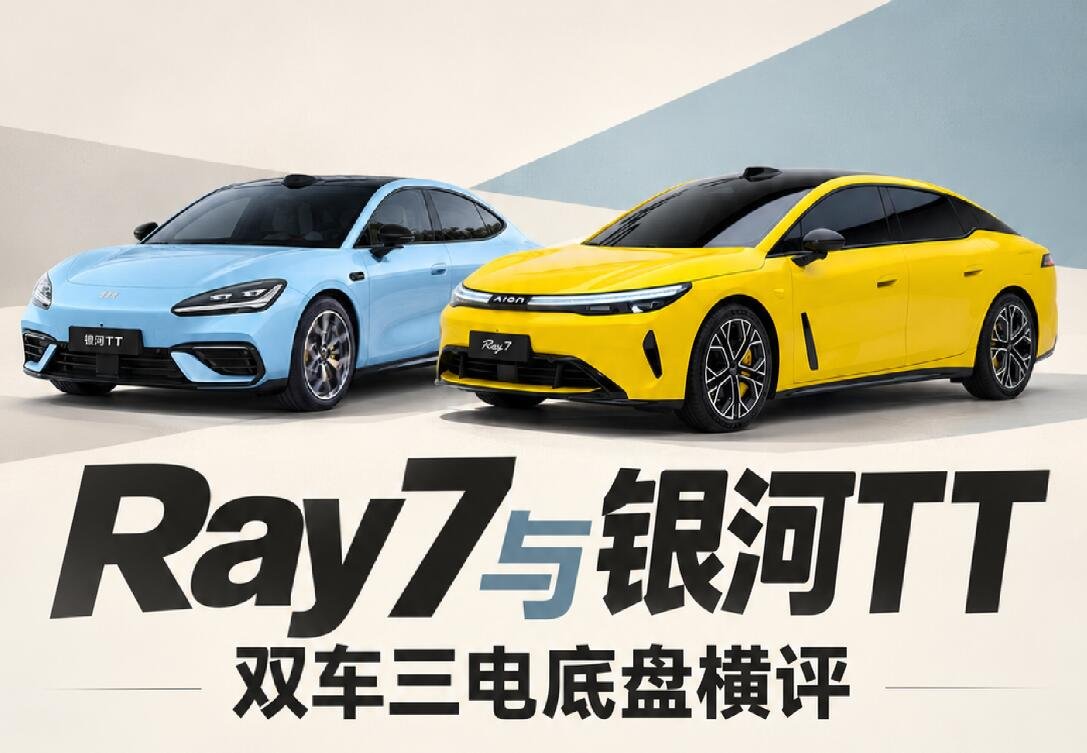
I recently compared the AION Ray7 and the Galaxy TT, and the technical orientations of these two rear-wheel-drive coupe sedans are clearly different:
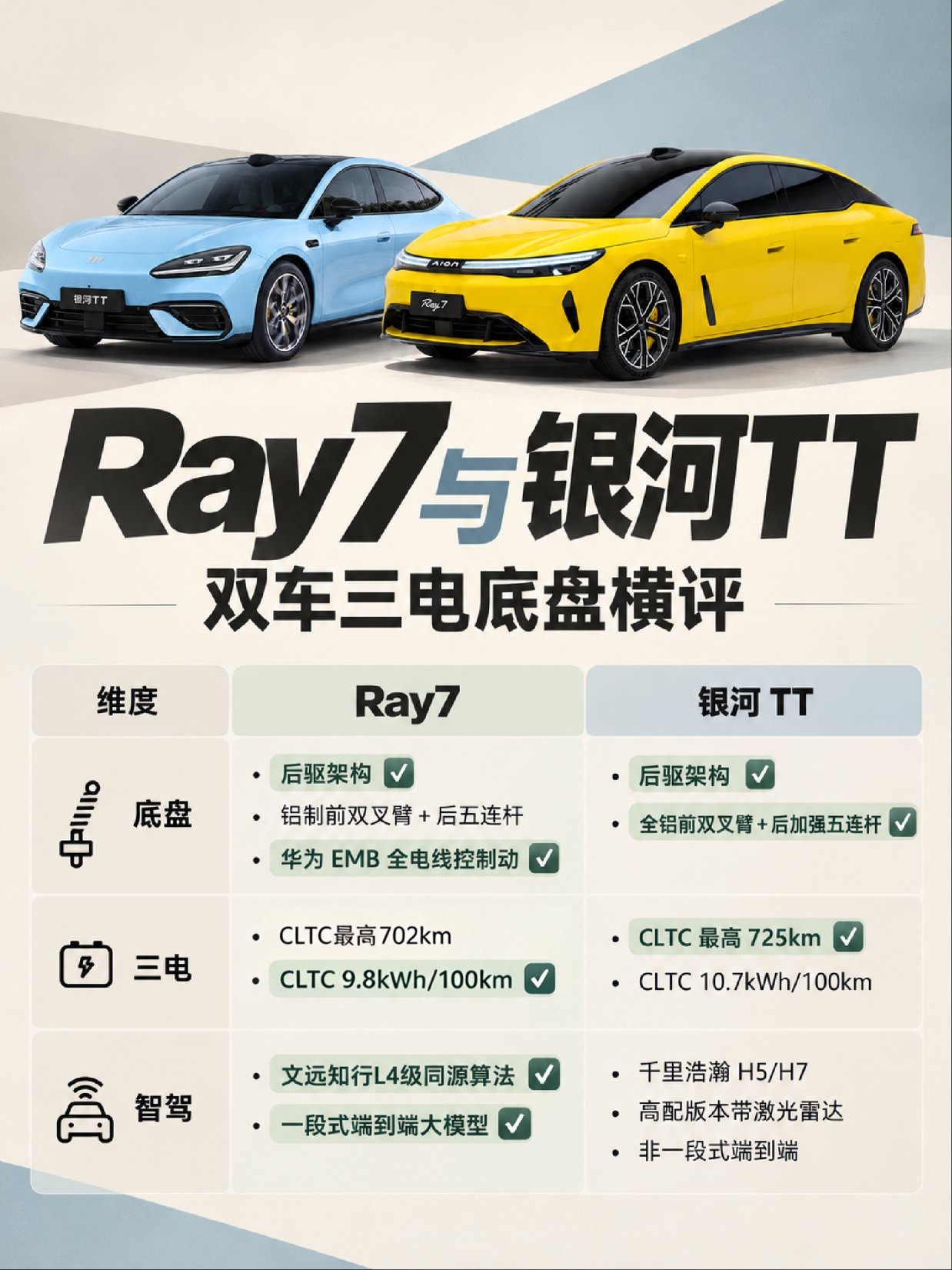
Galaxy TT: CLTC maximum range 725 km, energy consumption per 100 km 10.7 kWh
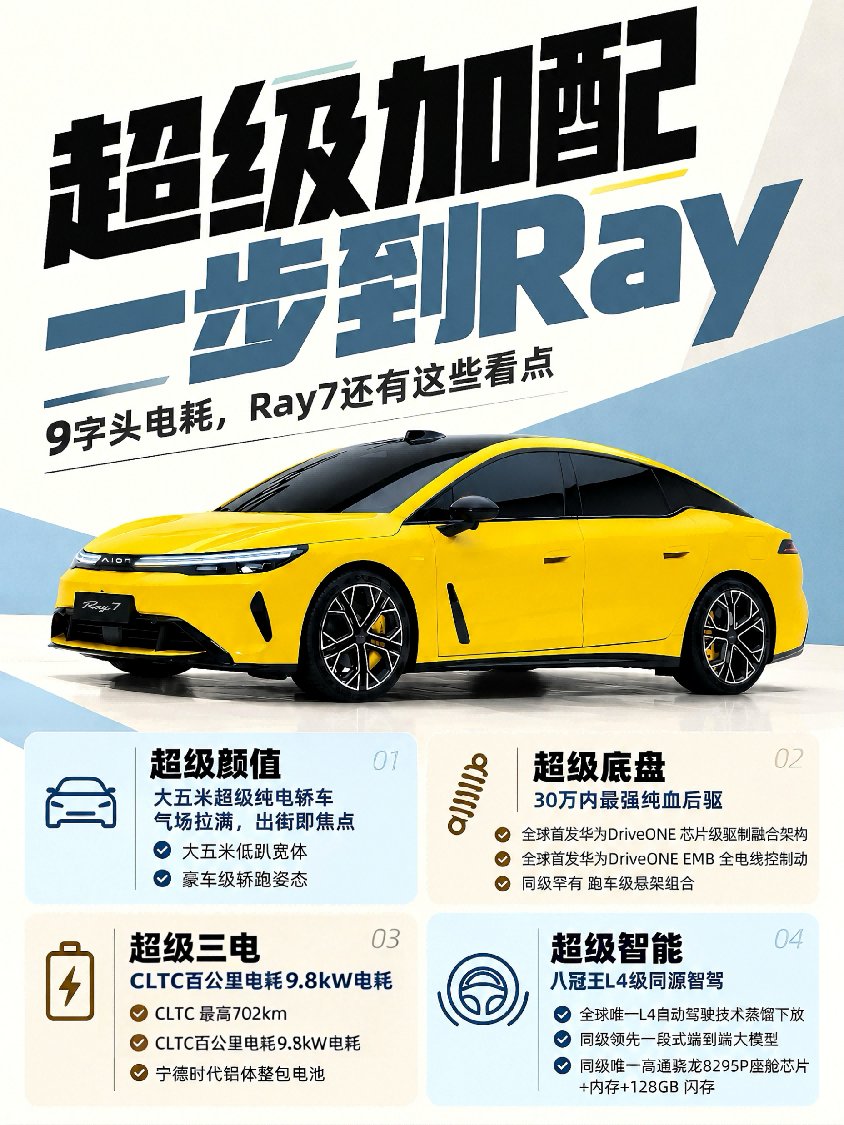
AION Ray7: CLTC maximum range 702 km, energy consumption per 100 km only 9.7 kWh
In short: the Galaxy TT has a longer maximum range, but the Ray7 has lower energy consumption. For owners who drive to and from work every day and travel frequently, lower energy consumption can save a considerable amount on electricity bills, making long-term use more cost-effective.
In addition to electric drive energy consumption, the two cars also differ in chassis and intelligent driving:
⚙️Chassis configuration
Both cars feature rear-wheel drive + front double wishbone + rear five-link high-end suspension.
The Ray7 is equipped with the world's first Huawei DriveONE chip-level drive-control integration architecture, and the EMB version comes with full-wire brake-by-wire, offering faster handling response and higher safety redundancy.
The Galaxy TT has an all-aluminum front double wishbone + reinforced rear five-link, paired with CCD-AI Magic Carpet, which provides better comfort.
🧠Intelligent driving
The Ray7 is equipped with WeRide L4-level homologous algorithms + a one-stage end-to-end large model, giving it stronger underlying intelligent driving technology.
The Galaxy TT adopts Qianli Haohan H5, which is not one-stage end-to-end, so it may lag slightly in the experience.
If daily vehicle use is very frequent, when choosing a car you must comprehensively consider energy consumption, chassis handling, and advanced intelligent driving, and not simply look at maximum range alone.