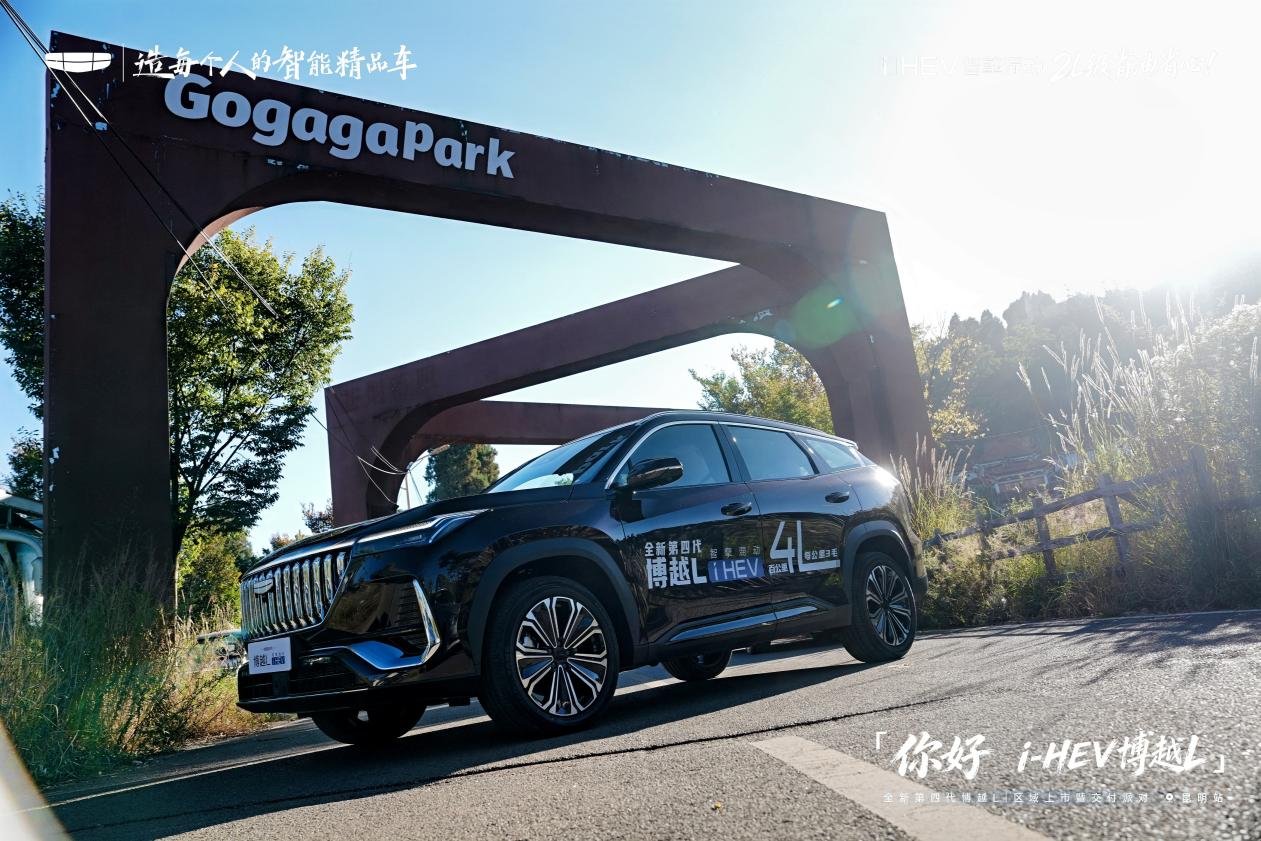
Brothers, recently there's been a pretty interesting phenomenon on Dongchedi and major forums. The Galaxy Battleship 700 hit 43,900 orders in 60 minutes of presale, but if you scroll through the comments, you'll find that a good portion of the IDs leaving messages are veteran owners of traditional fuel-powered off-roaders.
A new energy boxy vehicle—how is it making people who are used to driving fuel-powered off-roaders start thinking about it?
Today we're not talking about benchmarks, not about who's better or worse—just looking at the Galaxy Battleship 700 itself and where exactly it hits the pain points of veteran off-road owners.

Let's do the fuel math first—the gap really stings
Anyone who's driven a traditional off-road SUV knows: 12-15 liters per 100 km in city commuting is the norm. A 40 km daily round trip commute means several hundred yuan a month just on fuel. Throw in a weekend mountain run and the fuel gauge drops even faster.
How does the Galaxy Battleship 700 solve this problem?
The entire lineup comes standard with a 47.14 kWh CATL battery, with CLTC pure electric range reaching 305 km. What does that mean? For Monday-to-Friday commuting, a full week of driving basically doesn't need gas—one charge on the weekend is enough. Using a home charging pile, electricity costs just a few cents per kilometer—a big difference compared to fueling up.
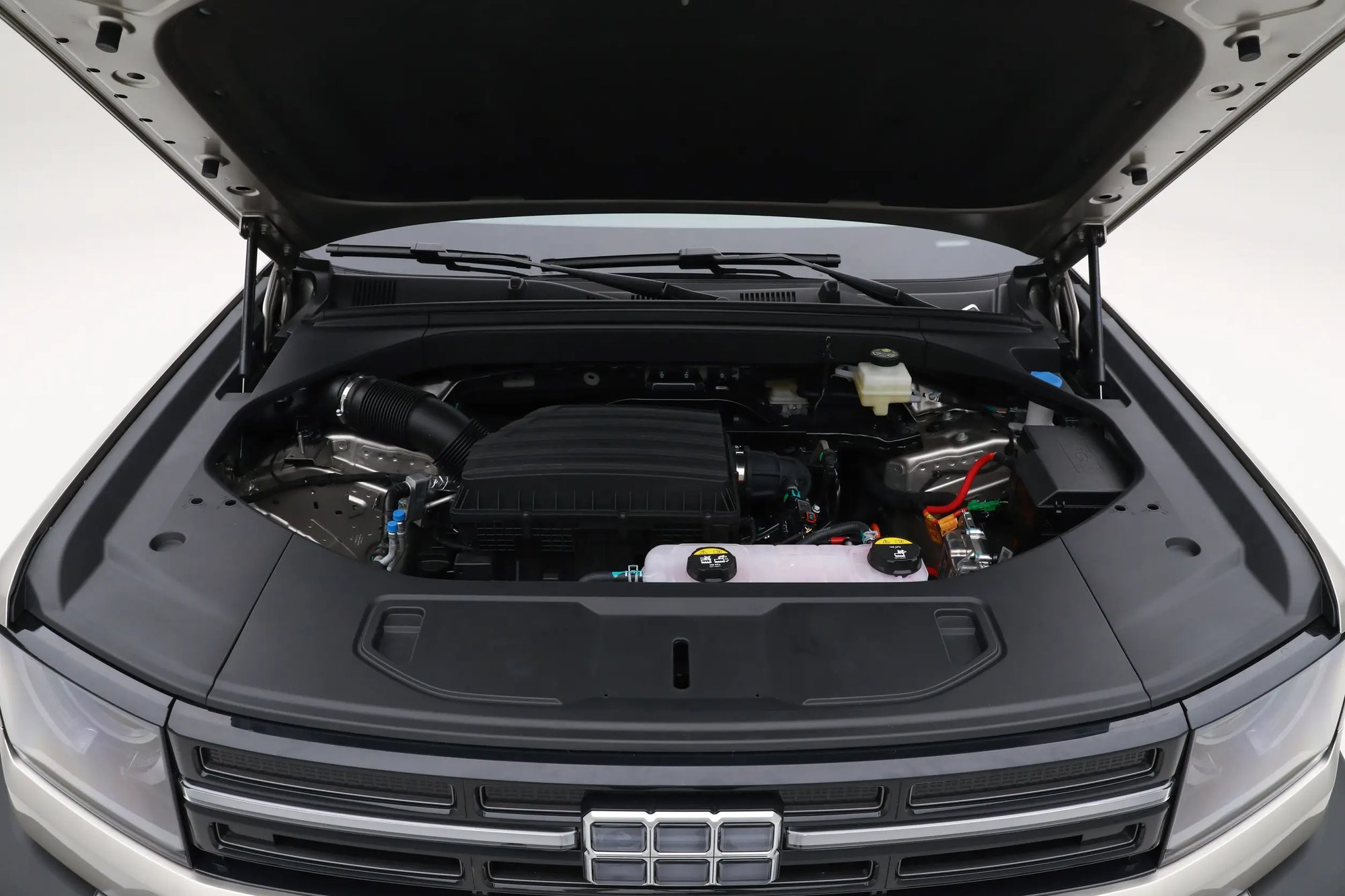
No need to panic on long trips either. An 80-liter fuel tank paired with the plug-in hybrid system delivers a combined range of 1,770 km, and fuel consumption in depleted-battery mode is just 5.95 liters per 100 km. Driving from the city to western Sichuan, you don't need to carefully plan charging stations along the way.
Put simply: pure electric for daily commuting, hybrid for weekend outings, full tank and full charge for long-distance crossings. Three scenarios switch effortlessly—no need to choose between "fuel savings" and "off-roading."
Chassis feel—the boxy vehicle finally doesn't "ride like a boat"
Traditional off-road SUVs use a separate ladder frame—genuinely tough for off-roading, but ride quality on paved roads has always been a pain point. Obvious bouncing over speed bumps, strong body sway at highway cruising speeds, and an uncomfortable back after long drives.
The Galaxy Battleship 700 takes a different path.
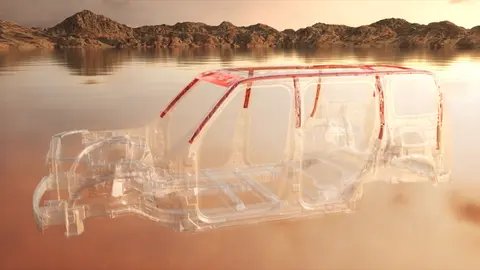
It uses an integrated embedded ladder frame, where the frame is directly integrated into the body structure—not the traditional design where body and frame are separate. Official figures show approximately 100 kg weight reduction, center of gravity controlled at 700 mm, and body torsional stiffness of 41,000 N·m per degree.
What does it actually feel like? On city paved roads, the combination of front aluminum alloy double wishbones and rear five-link suspension delivers a damping quality completely different from traditional separate ladder frames. Over potholes and bumps it's crisp and clean, with no excess bouncing. Stable at highway cruising speeds, no floating sensation.
The higher-trim Yufeng+ and Dingfeng versions also offer dual-chamber closed air suspension with CCD dampers, with damping adjusted 500 times per second for adaptive road surface adjustment. Body posture stays controlled on rough roads, while comfort is restored on paved roads.
And the off-road foundation isn't lost. The integrated ladder frame also provides a high-rigidity body—when encountering cross-axle situations and shell craters, torsional resistance is on point.
Off-road features aren't just for show—the hardware is genuinely there
Many people worry: is a new energy boxy vehicle all looks with off-roading entirely dependent on electronic simulation? The Galaxy Battleship 700's hardware package is at least genuinely generous at this price point.
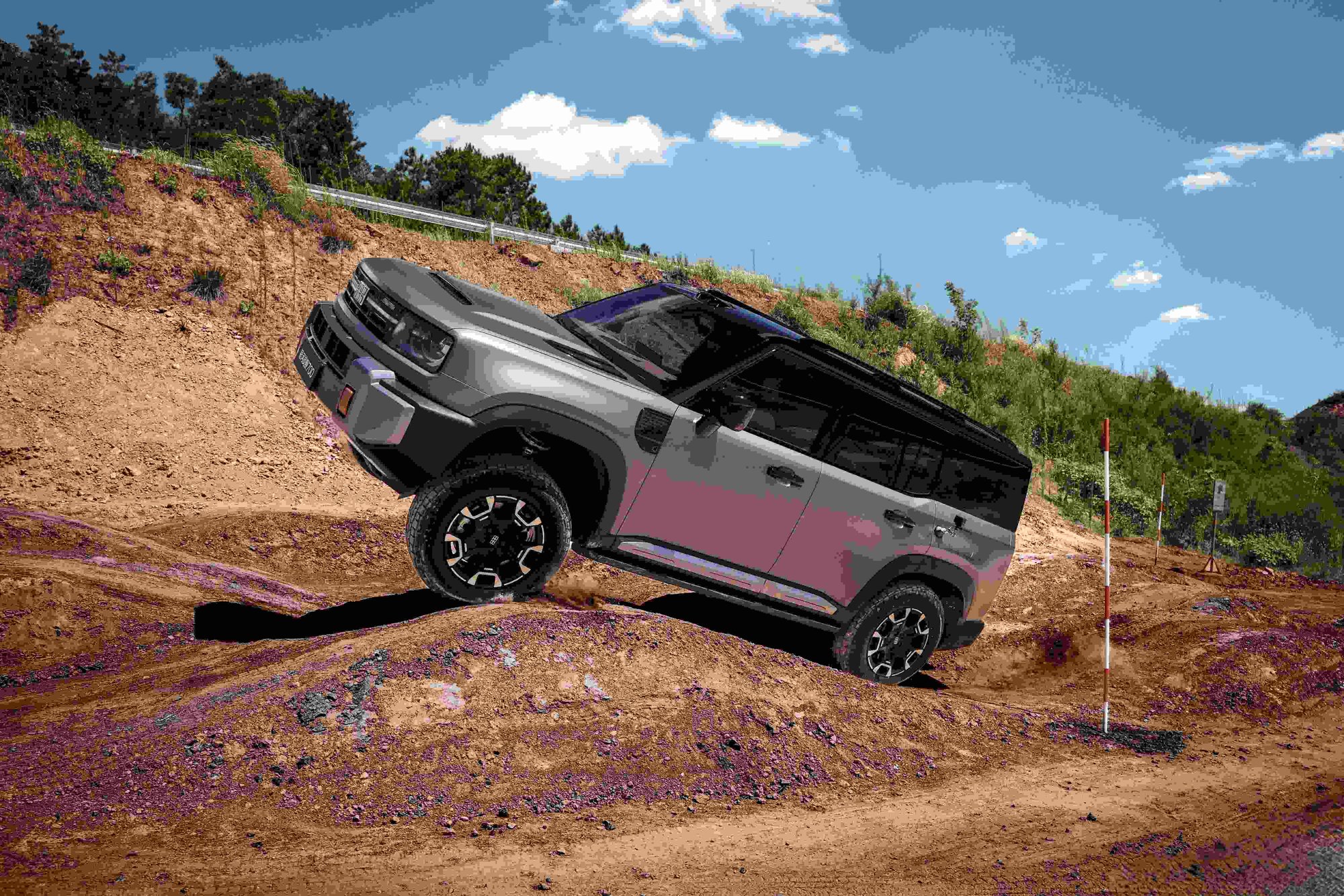
First, the tri-motor four-wheel-drive system. The 1.5T AWD version has front and rear motor power of 230 kW plus 340 kW, while the 2.0T Dingfeng version delivers combined power of 830 kW and 0-100 km/h acceleration in 3.95 seconds. With that power reserve, you feel confident climbing long slopes and charging sand dunes.
Rear axle mechanical differential lock engages in 0.2 seconds. This isn't electronic simulation—it's a real mechanical lock that transfers power to wheels with grip when a single wheel is airborne.
Waltz turn-on-the-spot function with a turning diameter of 3.36 meters. Narrow alley U-turns in the city, passing on mountain roads—the large body is no longer a burden.
800 mm wading depth—for urban flooding during heavy rain or river crossings in the wild, having that number on paper gives peace of mind.
AI all-terrain digital chassis with G-ATS intelligent all-terrain system supporting automatic identification and switching of 7 terrain modes. Friends without extensive off-road experience won't panic when encountering rough roads.
This isn't encouraging everyone to challenge extreme off-roading—it's saying that if you encounter rough roads, standing water, or steep slopes, your vehicle has the capability to get you out. That confidence is valuable for users who frequently drive long distances and go on outings.
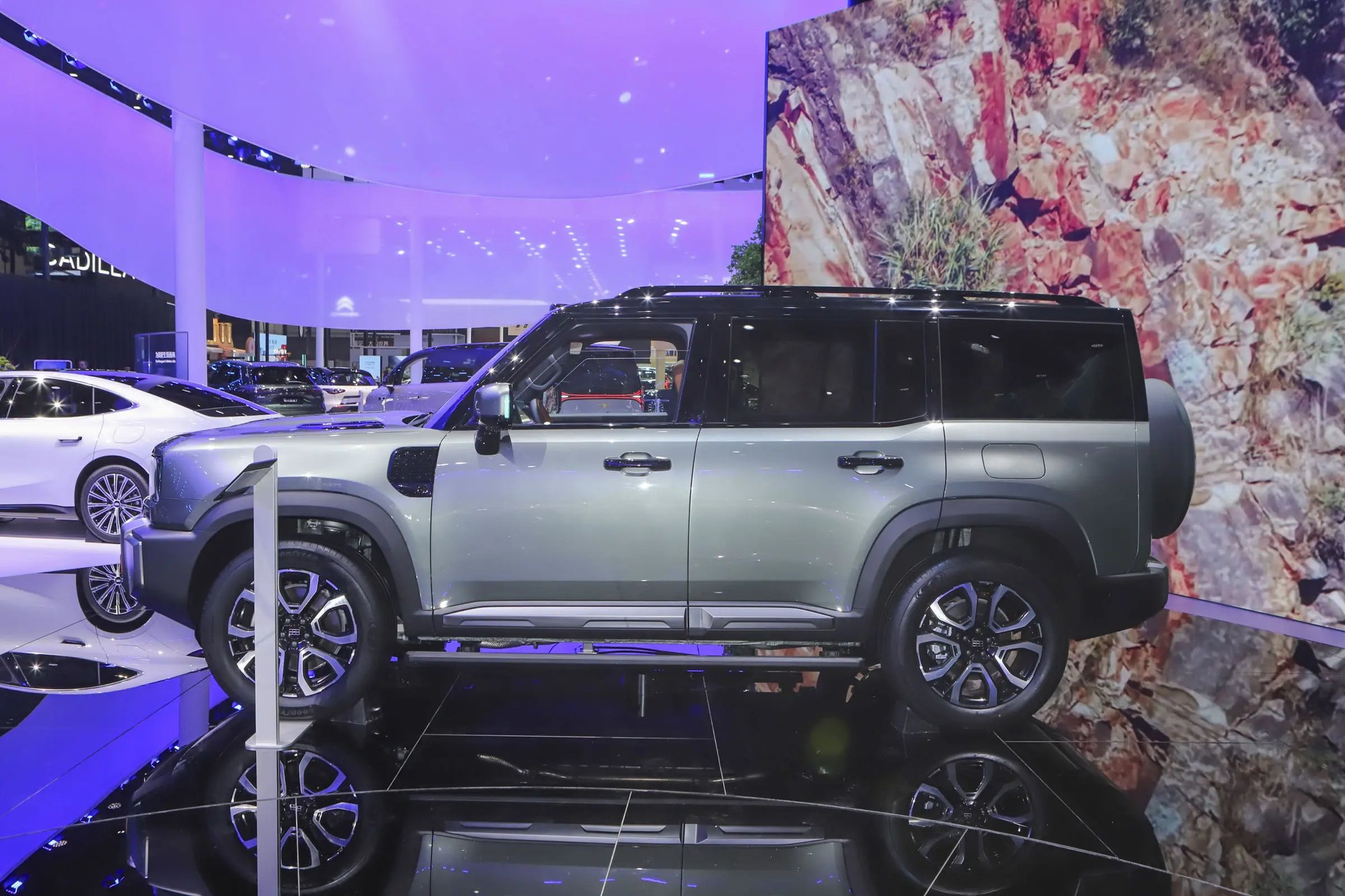
Assisted driving and cabin—from "good enough" to "enjoyable"
This point may feel more intuitive to traditional off-road vehicle owners.
The Galaxy Battleship 700's higher trims feature the Qianli Haohan H7 assisted driving solution with NVIDIA Thor-U chip, delivering 700 TOPS of computing power. Both urban and highway navigation assist are available, with D2D door-to-door navigation assist covering the entire journey. It supports assisted parking for over 300 types of parking spaces—dead-end roads and narrow spots included.
The cabin runs FlymeAuto2 system with five-screen connectivity. A 15.4-inch 2K central control screen, 12.66-inch passenger screen, and AR-HUD head-up display deliver smooth information interaction. The system supports four-zone voice recognition—front passenger and rear passengers can each speak without interference.
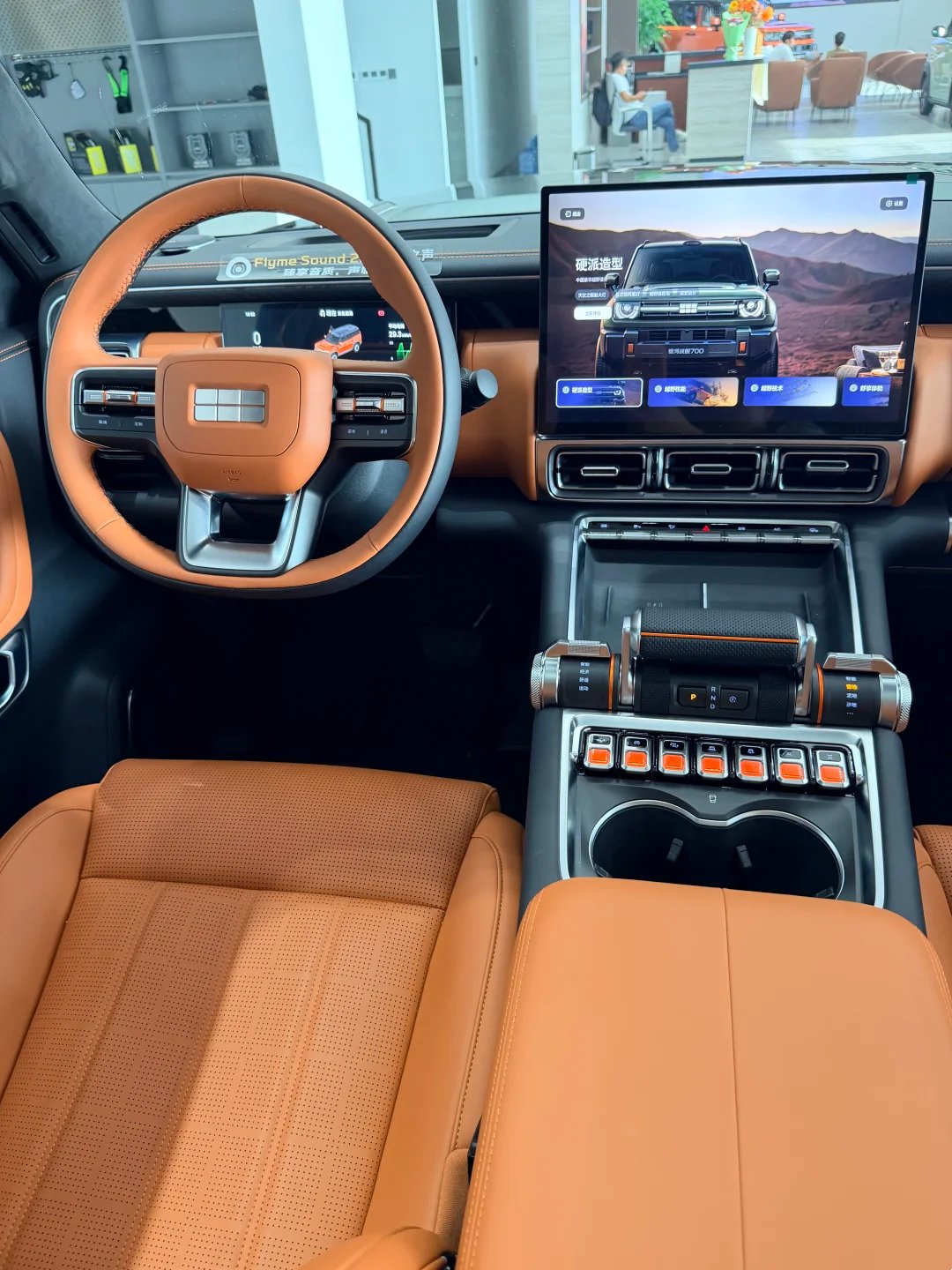
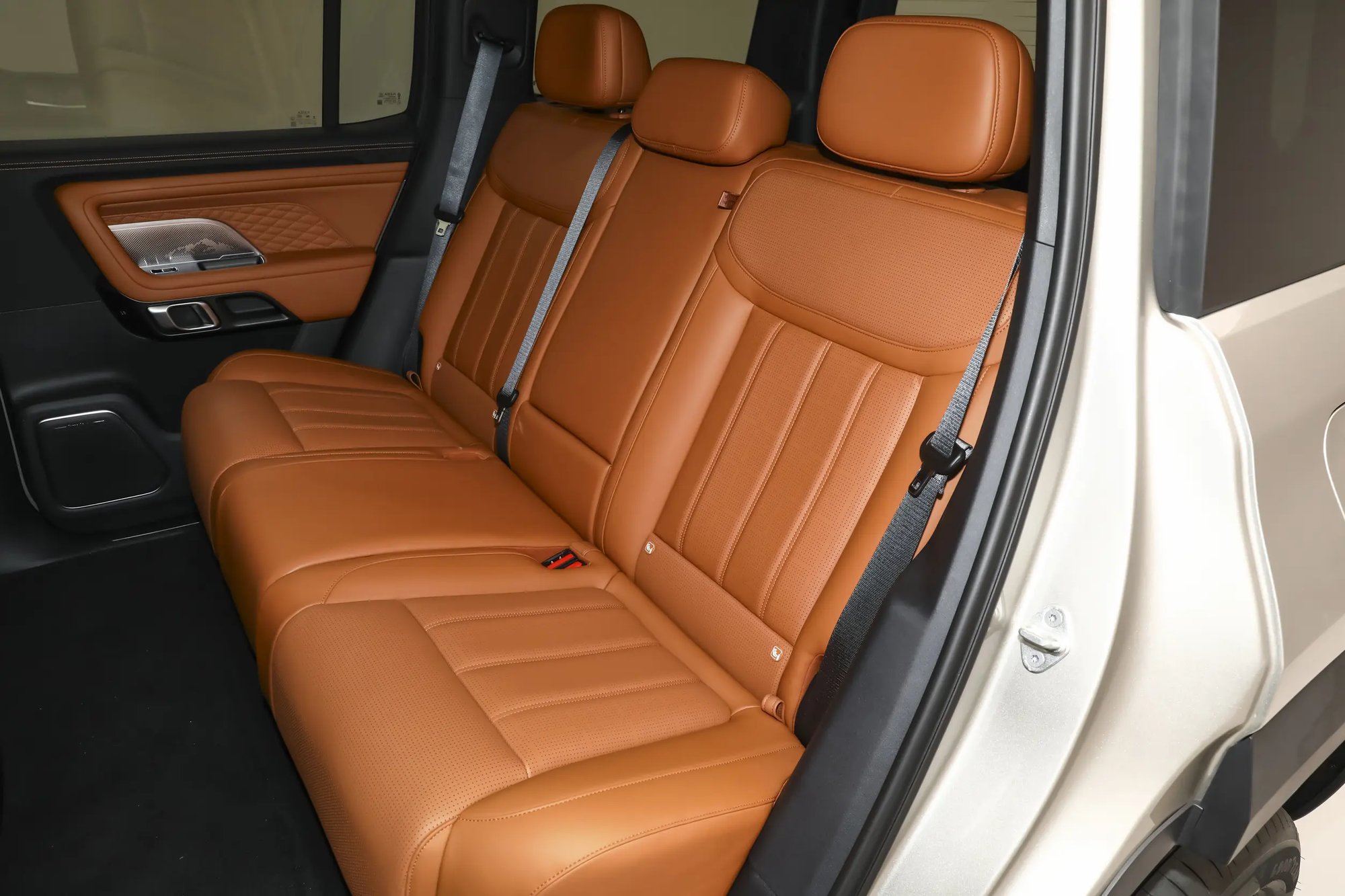
Comfort features are also generous. An 18.5-liter dual-door refrigerator keeps cold drinks ready for summer camping. 14-point seat massage for driver and passenger, full-vehicle seat ventilation and heating—no fatigue on long trips. 23-speaker FlymeSound audio maximizes the in-cabin sound experience.
Interestingly, while the cabin piles on smart features, it retains plenty of physical buttons and an aircraft-throttle-style gear shifter. In off-road scenarios you can operate by feel even with gloves on—no fumbling because everything is a touchscreen.
Safety—off-road vehicles never compromise
For people buying off-road SUVs, safety is never a bonus feature—it's the baseline.
The Galaxy Battleship 700's body uses a six-horizontal, seven-vertical, eight-ring cage structure with a hidden roll cage, and roof crush resistance of 16 tons. High-strength steel accounts for over 90%, and the integrated ladder frame ensures overall rigidity.
For battery safety, the entire lineup uses CATL cells with 11-layer structural protection plus 6-layer bottom protection, recessed battery design, 313 mm ground clearance, and IPX8 waterproof rating.
Higher trims and the Land Ark version also offer space-ground integrated low-orbit satellite communication. In no-man's land, deep mountains and canyons where there's no cell signal, satellite communication keeps you connected. This feature is genuinely rare in vehicles under 400,000 yuan.
Final thoughts
This isn't to persuade anyone to switch cars, nor to say one is necessarily better than another. Every owner has different needs, so choices differ.
But the Galaxy Battleship 700 does offer different solutions across three scenarios: daily commuting, weekend off-roading, and long-distance road trips. For friends already driving traditional off-road SUVs who are troubled by fuel consumption and comfort, it deserves a spot on the shortlist for serious consideration.
Do you think traditional off-road owners should consider new energy boxy vehicles? Let's chat in the comments.